Case Study: Innovating Healthcare Education with Generative AI
Background
Jenny is a Senior Lecturer specialising in healthcare education, charged with preparing students for real-world clinical assessments. Traditionally, her students honed their skills through hands-on practice in a simulation suite using mannequins. However, limited space and tight scheduling meant practice opportunities were scarce, sometimes leaving students feeling underprepared and lacking confidence.
The Challenge
Simulation sessions are resource-heavy — they demand dedicated physical space, specialised equipment, and staff oversight. These constraints restricted how many students could train at once and how frequently they could practice. As a result, many students found it difficult to fit enough rehearsal time into their schedules outside formal sessions, limiting their ability to consolidate learning and feel ready for assessments.
The Generative AI Solution
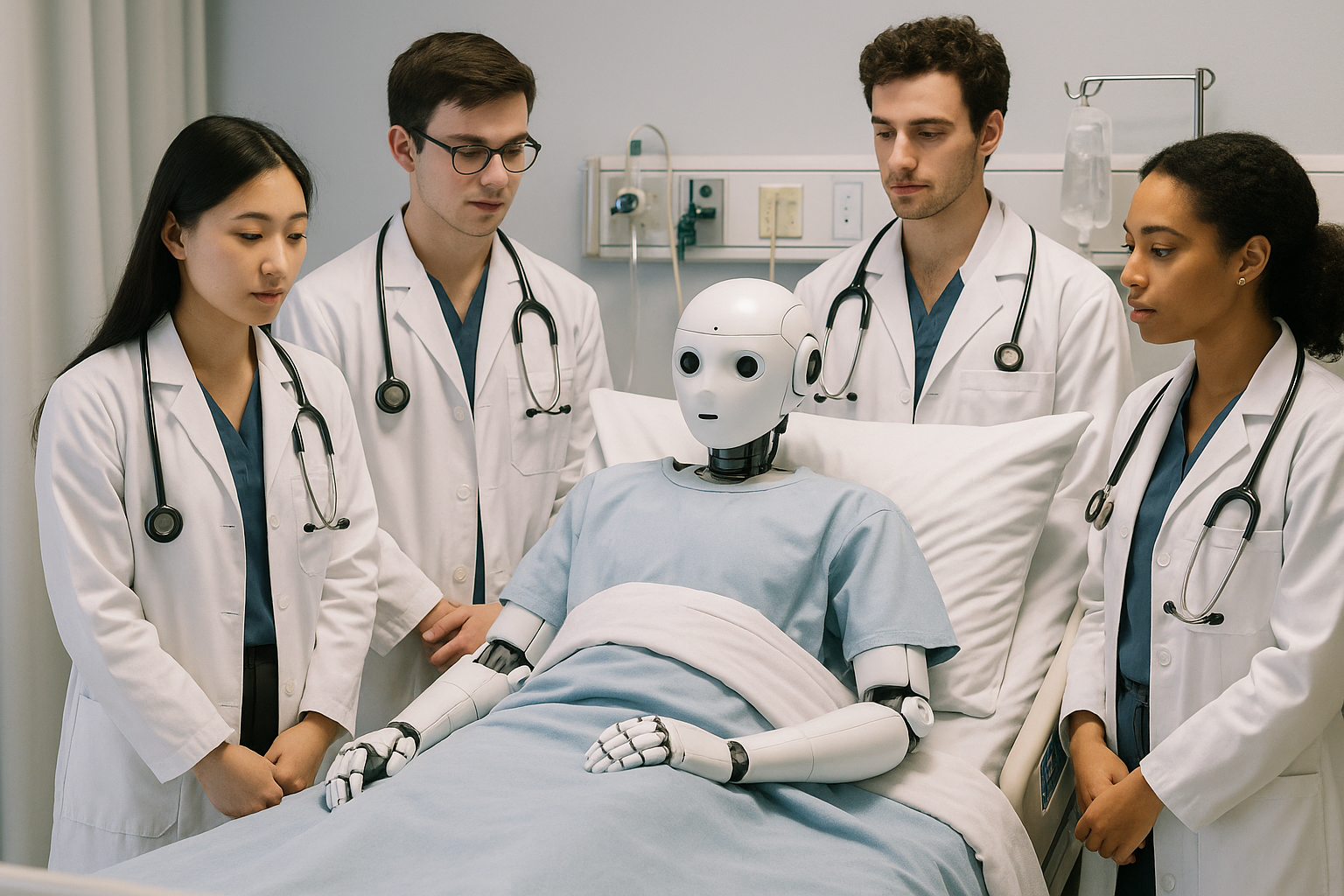
Jenny turned to Generative AI to bridge this gap by creating a custom GPT-powered chatbot tailored specifically for healthcare assessment scenarios. This AI-powered tutor simulates realistic clinical situations students face in person, enabling them to engage interactively, rehearse, and receive immediate, personalised feedback — all independently and on their own time.
Notable features include:
- Realistic scenario simulation: Mimics the complexity and flow of clinical assessments in the simulation suite.
- Adaptive feedback: Responds to student answers with tailored advice, guiding improvement dynamically.
- Anytime accessibility: Available remotely, allowing students to practice from home or wherever suits them.
- Multi-language customisation: Supports students practicing in their native languages, promoting inclusivity.
Impact on Students and Teaching Staff
For students, the chatbot has unlocked significantly more practice time—adding extra hours daily. This flexibility means learners can repeat scenarios as often as needed, deepening their competence and boosting confidence. Some even engage with the chatbot in their preferred language, making learning more accessible.
Teaching staff like Jenny have seen a welcome reduction in pressure on physical resources and instructional time. Because the chatbot replicates the length and complexity of live assessments, staff can shift focus towards more advanced teaching tasks and personalised mentorship, while students benefit from consistent, repeatable practice.
Broader Educational Benefits
Jenny’s experience marks a notable shift in how AI is perceived within her institution. Rather than a threat or a novelty, AI has emerged as an ethical, powerful partner in education—one that can enhance teaching quality and student outcomes. Her success story has inspired colleagues to explore AI applications more widely, signalling a cultural shift toward innovation in educational technology.
Final Thoughts
Jenny’s case highlights a practical and thoughtful application of Generative AI—one that doesn’t replace educators but empowers both learners and teachers. It’s a glimpse into how AI can augment traditionally resource-intensive education settings, making learning more personalised, inclusive, and scalable. This approach is worth watching closely for anyone involved in healthcare training or similarly hands-on disciplines.