The Future Belongs to the Curious, and the Curious Are Coming
A $250 billion defence technology company just told the world that the most valuable minds of the AI era won’t be the ones with the best degrees. They’ll be the ones who think differently.
Palantir CEO Alex Karp said it plainly in a recent interview: there are basically two ways to know you have a future. Either you have vocational training, or you’re neurodivergent. That’s it. Not a degree from Oxford. Not ten years in corporate finance. Not a LinkedIn profile full of acronyms. Vocational skills or a brain that works differently from the one the education system was designed for.
That’s a bold statement from anyone. From the CEO of one of America’s most powerful technology companies, it’s a signal that the corporate world should be paying very close attention to.
But here’s what I think Karp is really getting at, and it’s bigger than neurodivergence alone. What he’s describing isn’t just about people with a diagnosis. It’s about how people think and where their strengths sit. The fast thinkers. The pattern spotters. The ones who approach problems sideways. The ones who never thrived in a system that rewards sitting still and memorising facts, but who come alive when you give them a real problem and the freedom to solve it their way. Some of those people are neurodivergent. Some have never been assessed and never will be. Some just think differently enough that the traditional system never quite worked for them. The label matters less than the trait. And the trait is what AI rewards.
What Karp Actually Said
Karp, who has spoken publicly about living with dyslexia, didn’t mince words. He argued that AI will disproportionately displace white-collar work, and that the people best positioned to thrive aren’t the ones who followed the traditional path. They’re the ones who think fast, see patterns others miss, hyperfocus on problems until they crack them, and approach things from directions that conventional thinkers would never consider.
He went further. He said our entire testing system is built around skills that were valuable during the Industrial Revolution. That it actively filters out the dyslexics, the neurodivergent, the people who can’t sit still, the ones who need to build things. And then it puts them in a box labelled “difficult” rather than one labelled “different.”
Palantir has put real money behind this. Their Neurodivergent Fellowship offers salaries up to $200,000, doesn’t require a formal diagnosis, and Karp personally conducts the final interviews. It received thousands of applications within days. They’ve also launched a separate Meritocracy Fellowship for high school graduates who skipped university entirely, with the tagline “Skip the debt. Reclaim years of your life.”
This isn’t a PR exercise. This is a company worth a quarter of a trillion dollars restructuring how it finds talent because it genuinely believes the old way is broken.
Sources: Fortune (24 Mar 2026), TBPN Interview (Mar 2026)
Why This Matters for the UK
Now, we don’t have a Palantir over here. We don’t have a Silicon Valley CEO throwing $200k fellowships at people who think differently. But what we do have is a massive, largely untapped workforce of neurodivergent people, and a system that still doesn’t know what to do with them.
The NHS estimates that around one in seven people in the UK are neurodivergent. That’s nearly 10 million people. And yet the employment rate for autistic adults in this country sits at roughly 31%. Not 31% unemployment. 31% employment. For context, the overall employment rate for disabled people is 54.7%, and for the general population it’s significantly higher still. That gap isn’t because neurodivergent people can’t work. It’s because the system isn’t set up for how they work.
The UK government recognised this when it launched an independent neurodiversity employment panel in January 2025, chaired by Professor Amanda Kirby. The Buckland Review of Autism Employment had already laid the groundwork. But reviews and panels move slowly. The world of AI is not moving slowly. And right now, there’s a growing mismatch between the pace at which AI is changing the value of different cognitive skills and the pace at which our institutions are catching up.
Only 36% of UK employers currently have a neurodiversity policy. Fewer than four in ten even reference neurodiversity in their DEI strategy. Over half of managers say they lack the confidence to support neurodivergent colleagues. And neurodiversity-related employment tribunals have increased by 164% in the last four years.
The data paints a picture of a country that’s starting to talk about neurodiversity but hasn’t yet figured out what to actually do about it.
Sources: GOV.UK (Jan 2025), NeuroBridge (Jan 2026), Indeed Hiring Lab UK (Feb 2025)
The AI Connection Nobody Is Talking About
Here’s where it gets interesting. And here’s where I think Karp is onto something that the UK hasn’t caught up with yet.
AI tools, the kind that millions of people are now using every day, reward exactly the cognitive traits that neurodivergent people tend to have. Pattern recognition. The ability to hold multiple threads of thought simultaneously. Rapid context-switching. Hyperfocus. Creative leaps that connect things other people wouldn’t think to connect. The confidence to try something completely sideways because linear thinking isn’t how your brain operates.
I’ve trained hundreds of people to use AI over the past two years. And I can tell you, without hesitation, that the people who take to it fastest are rarely the most technically qualified people in the room. They’re the ones who think in parallels. The ones who can run three different tasks across three different AI sessions and keep all of them on track. The ones who instinctively understand that AI is a delegation and communication skill, not a technical one, because their brains have always worked by farming things out across multiple tracks at once.
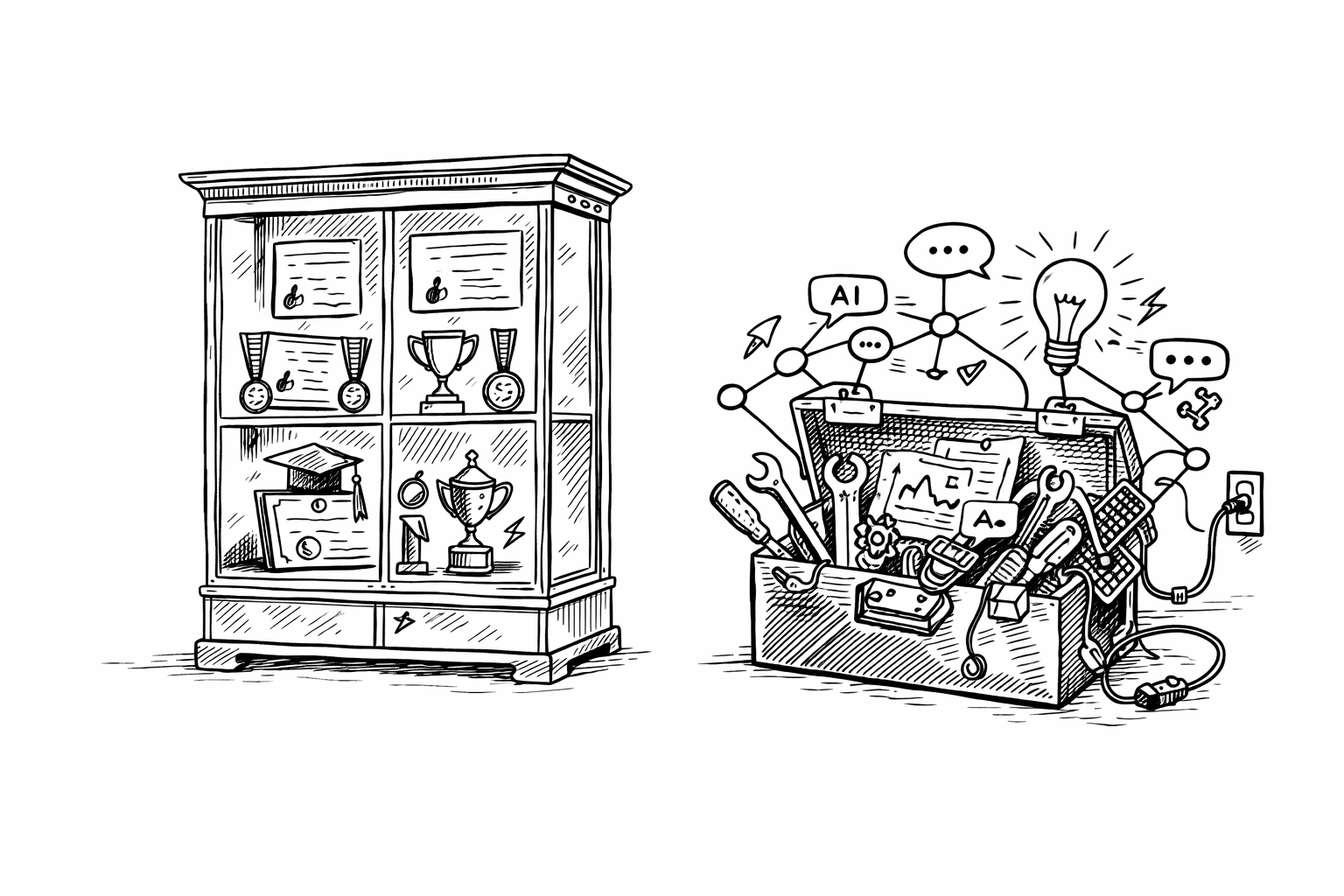
These aren’t skills you learn on a training course. They’re cognitive patterns. And in a world where AI can learn one skill and do it incredibly well, the people who can throw their hat into the ring for most tasks, the jacks of all trades, the curious generalists, the ones who see connections everywhere, become extraordinarily high-value assets.
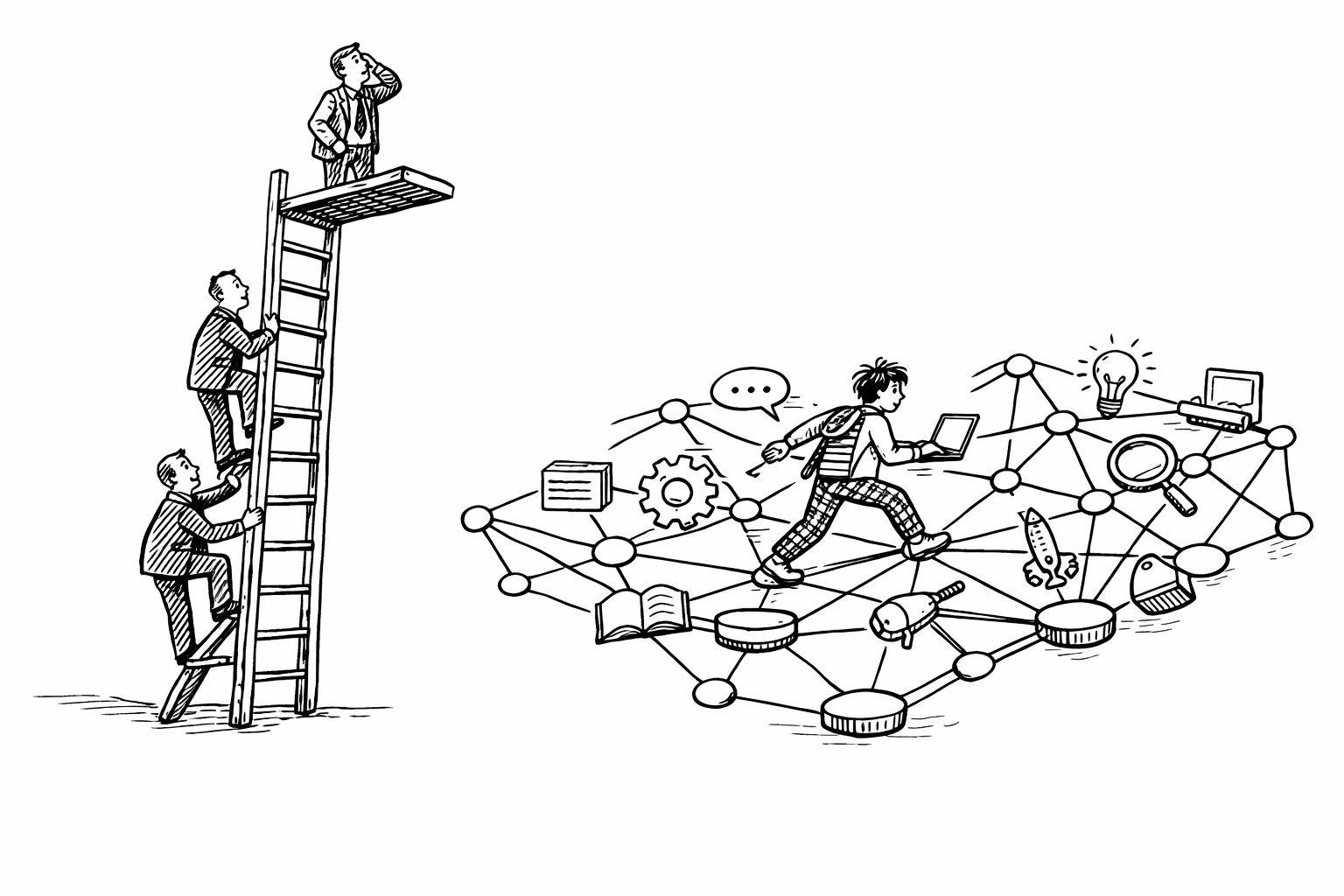
The old model said: specialise. Get a degree. Learn one thing deeply. Climb a ladder. The new model says: the ladder is being replaced by a web, and the people who can navigate a web are the ones whose brains were always wired that way.
The Companies That Will Win This
The businesses that understand this first will have an enormous advantage. Not just because they’ll attract talent that other companies overlook, but because they’ll build teams that can actually use AI the way it’s meant to be used: as a multiplier for human thinking, not a replacement for it.
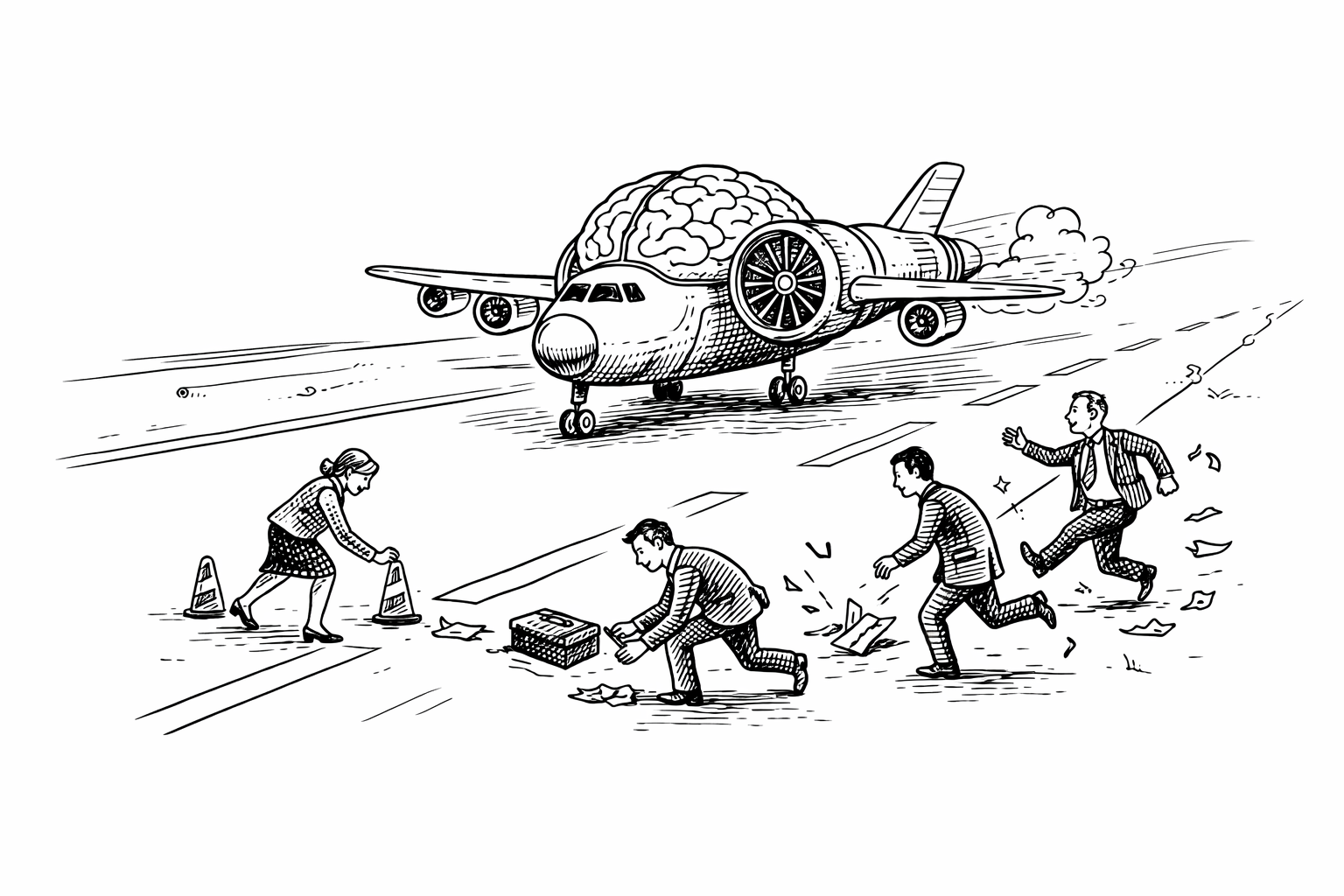
But it’s not enough to just hire neurodivergent people and hope for the best. The companies that do this well will be the ones that build support structures around these brilliant minds. That clear the runway so they can work at full speed. That understand what it actually means to manage someone whose brain processes information differently, and see that as an asset to be cultivated rather than a problem to be managed.
Gartner predicts that by 2027, a quarter of Fortune 500 companies will be actively recruiting neurodivergent talent to improve business performance. That’s not charity. That’s strategy. And the research backs it up. A 2023 study by Birkbeck’s UK Research Centre for Neurodiversity at Work found that over 80% of employers recognised hyperfocus as a key strength of neurodivergent employees, 78% cited creativity, 75% innovative thinking, and 71% detail processing.
Meanwhile, 45% of C-level executives and 55% of business owners already self-identify as neurodivergent. The people who built the businesses were never the ones who fit neatly into the system. They were the ones who couldn’t sit still in it.
Sources: Gartner (Feb 2024), City & Guilds Foundation / Neurodiversity Index 2025, The Neurodiversity Directory (2025)
So What Do You Actually Do About It?
I shared an early draft of this piece with Shane Evans, a self-leadership coach, and a Techosaurus Associate I work with, and his response was immediate: “Love it, but I want to know what to do next.” He’s right. Identifying the opportunity is one thing. Acting on it is another. And right now, there’s a gap between the companies that understand this intellectually and the ones that are actually changing how they operate because of it.
So here’s where the rubber meets the road, for leaders and for individuals.
If You Lead a Team or Run a Business
Start hiring for how people think, not how they present. The traditional interview process, structured questions, polished answers, a firm handshake, was designed to filter for conformity. It rewards the people who are good at interviews, which is not the same thing as the people who are good at the job. If you want to find the minds that will thrive in the AI era, ask candidates how they approach messy, ambiguous problems. Give them a real scenario and watch how they think, not just what they say.
Get genuinely curious about how each person in your team works best. Not everyone processes information the same way, and not everyone produces their best work under the same conditions. Some people need silence. Some need movement. Some need to talk things through out loud before they can write anything down. Some do their best thinking at six in the morning and their worst in an open-plan office at two in the afternoon. The more you understand about how your people actually operate, the more effectively you can deploy them. That’s not soft management. That’s strategy.
Set clear outcomes and then give people space to get there in their own way. This is the hardest one for a lot of leaders, because it means letting go of the process and trusting the result. But in a world where AI handles the repeatable tasks, the value of your people is in how they think, not in whether they follow the steps in the right order. Stop trying to make everyone think the same. Start building an environment where different thinking is an advantage, not an inconvenience.
And look at your recruitment and development practices honestly. How much of your HR process is designed to find and nurture diverse cognitive strengths, and how much of it is designed to filter for the people who already look and sound like everyone else? That’s not a comfortable question, but it’s the right one.
If You’re an Individual
Look at where your strengths already show up in how you think and work. Not the strengths your CV says you have, the ones you actually use every day. The way you solve problems. The way you spot patterns. The way you instinctively approach things that other people find confusing. That’s your edge, and it’s probably been your edge for a long time. You just might not have had the language for it, or the validation that it mattered.
Use AI to lean into those strengths, not to copy how other people work. If you think in parallels, run multiple AI sessions at once and see what happens. If you’re a visual thinker, use AI to turn your ideas into diagrams and prototypes. If you learn by doing, stop reading about AI and start building something with it. The people who get the most out of these tools are the ones who bring their own cognitive style to the process rather than trying to use AI the way a tutorial told them to.
Try things. Test ideas. Build something. Let your output speak for you. In a world where everyone has access to the same tools, the differentiator isn’t the tool. It’s what you bring to it. And the thing you bring to it is the way your brain works, which is the one thing nobody else can replicate.
The Education System Has to Change Too
This isn’t just a workplace issue. It starts much earlier.
Karp’s point about tests being built for the Industrial Revolution is one I’ve been making for a long time, and it applies just as strongly in the UK as it does in America. Our education system still fundamentally tests what you can memorise and write down in a room without any tools. When in the rest of your life are you ever in that situation? When does your boss say “solve this problem, but you’re not allowed to look anything up”?
If we keep testing for information retention in a world where information is on tap, we’re going to keep filtering out the minds that matter most. The ones who learn by doing. The ones who can be shown something once and then run with it. The ones who think around problems rather than through them. The ones whose exam results said “could do better” but whose actual ability to get things done in the real world is off the scale.
Booksmart won’t be enough any more. Lived experience, skilled hands, curious minds, and the ability to learn fast and adapt faster, that’s what the future values. And that future is arriving right now.
A Sharp Reality Check Is Coming
I won’t pretend this transition will be comfortable. For a lot of people in traditional white-collar roles, the next few years are going to be deeply unsettling. When AI can draft the contract, analyse the spreadsheet, write the report, and summarise the meeting, the question becomes: what are you actually for?
For the roles that were always about processing information in a structured, repeatable way, that question is going to get harder to answer. And I think some roles that have existed largely because they sit between people and complexity, roles that don’t create value so much as extract a fee from it, will struggle to justify themselves in a world where the complexity is handled by a machine that costs pennies.
That sounds harsh, but I don’t think it has to be a bad thing. Those people can retrain. They can reskill. They can discover what they’re actually good at rather than what the system told them to be good at. In a world where everyone has access to the same AI tools, the playing field levels out, and what rises to the top is genuine skill, genuine creativity, and genuine curiosity. I find that exciting, not frightening.
The Future Belongs to the Curious
I’ve said for a long time that the future belongs to the curious, not the compliant. And I stand by that more than ever. But now the curious are coming. The people whose brains never quite fit the mould are discovering that the mould was the problem, not them. The tools of the AI era are built for minds that jump between ideas, that see connections across domains, that can hold six things in their head at once and somehow keep all of them moving.
The companies that recognise this and build cultures that support it will outperform the ones that don’t. The education systems that test for curiosity and adaptability rather than memorisation will produce people who are ready for the world they’re actually entering. And the individuals who lean into their difference rather than trying to sand it down will find that, for the first time, the world is catching up to how they’ve always thought.
It’s going to be a turbulent ride. I won’t pretend otherwise. But I am here for it.
Scott Quilter, FBCS | Co-Founder & Chief AI & Innovation Officer, Techosaurus LTD