Creatives should be better at AI, not scared of it
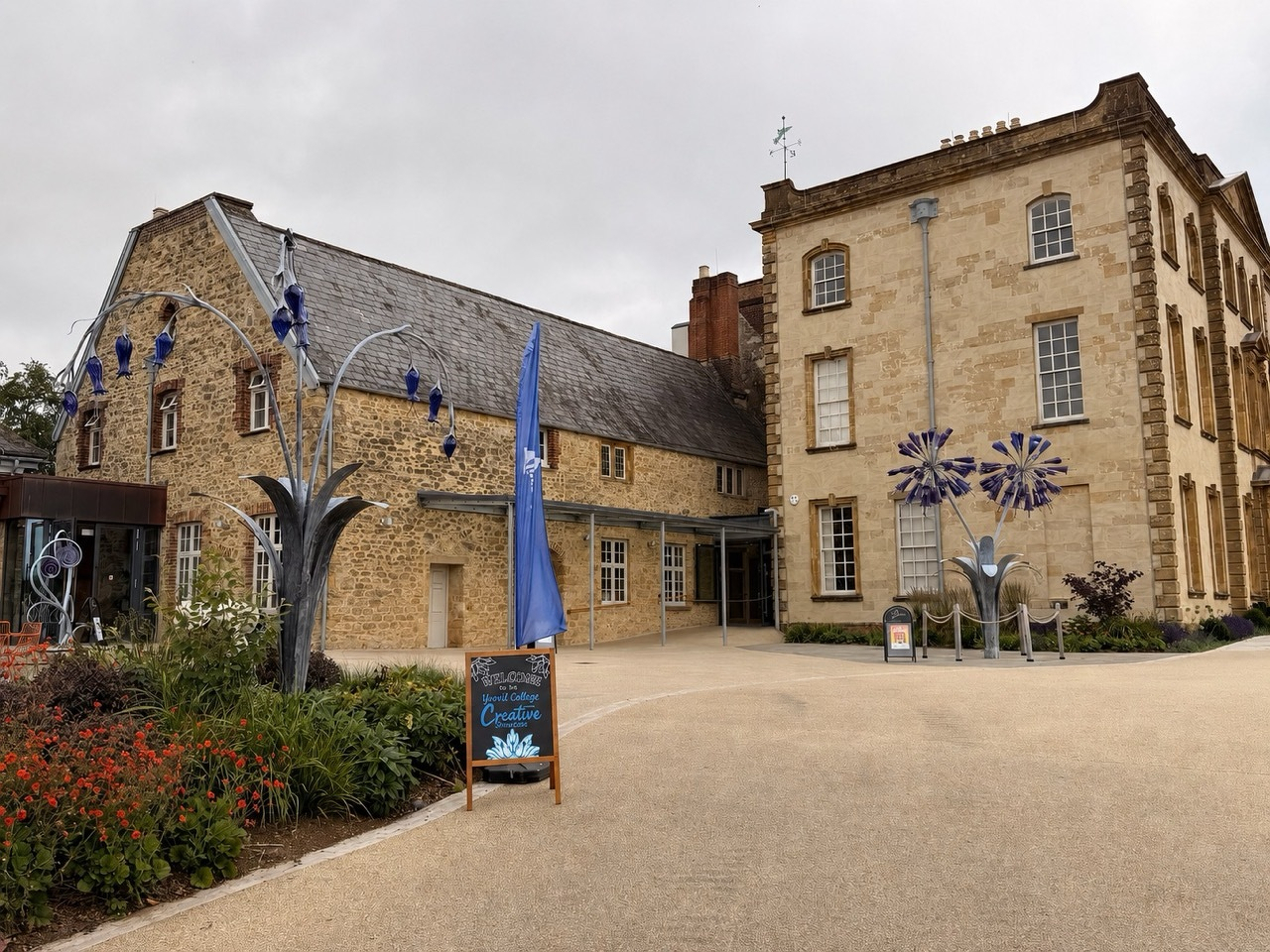
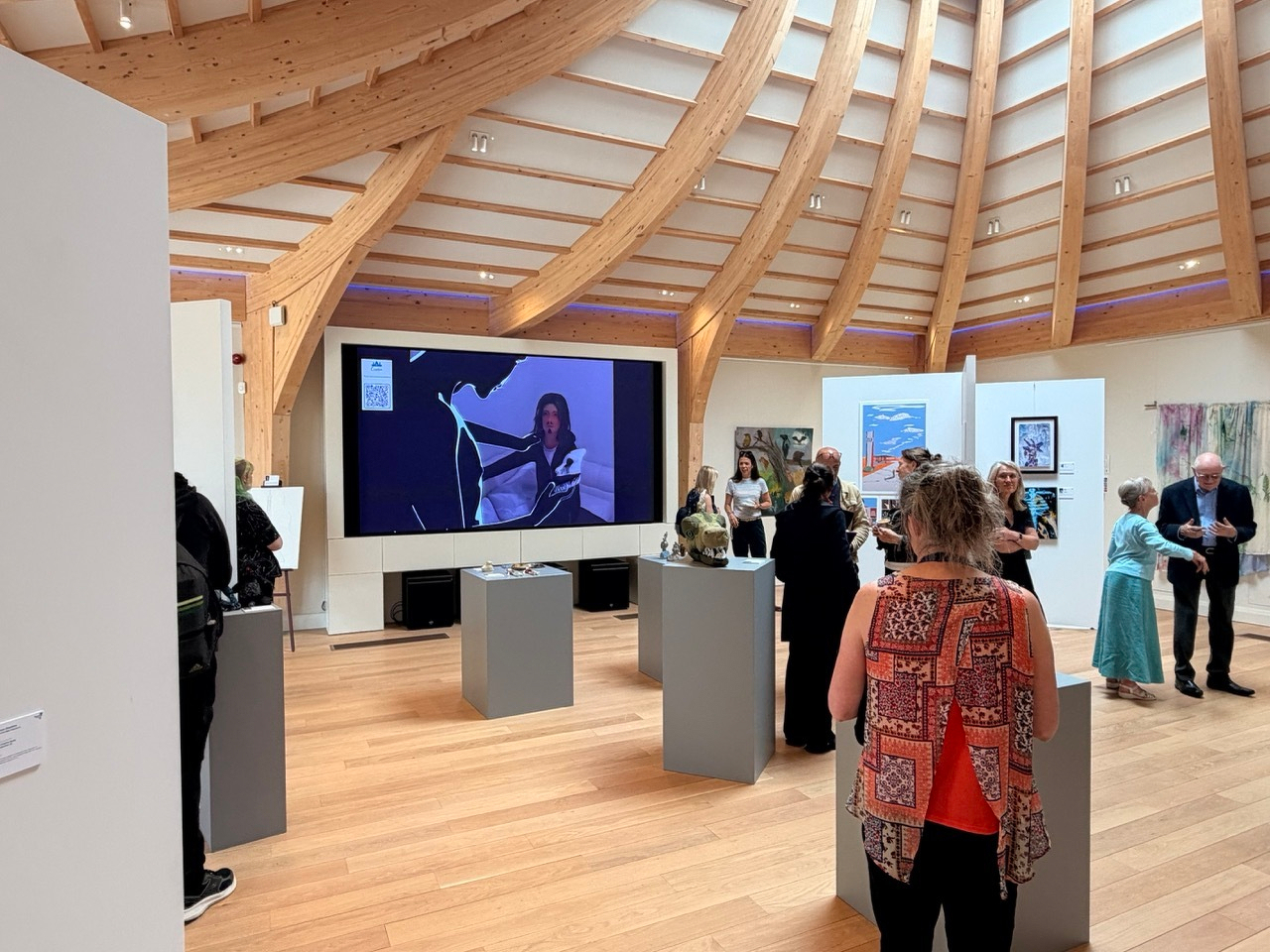
Today I attended the Creative Showcase from Yeovil College, held at the absolutely stunning Sherborne. There was art, media and digital work on display from Level 3 through to Level 7 students, and they were keen as mustard to show it off.
Rightly so.
What they had created with their creative minds, technical skill and outside-the-box thinking really impressed me. Speaking with them about their approach, the tools they were using, and the thinking behind the work lit a proper fire of inspiration in me.
I love that the work we do writing courses, delivering training, and teaching people how to use AI at Yeovil College sits within the creative department. I think more people should see it that way.
Creative people can always do more with the tools in front of them. They question them. They bend them. They find the odd corners. They use them in ways the instruction manual probably didn’t expect.
And that’s why I’m getting a bit fed up with the idea that AI is somehow against creatives.
I understand where the fear comes from. If your work involves words, images, design, music, video, ideas, structure, taste, judgement, craft, or any of the messy human stuff that sits around creativity, AI can look like a threat from a distance.
But I think we’re looking at it the wrong way round.
The people who should be most interesting with AI are the creative ones.
The artists. The writers. The designers. The engineers. The makers. The people who question things. The people who look at something and say, “What happens if I use it for this instead?”
Because that’s the bit that matters.
AI is very good at giving you the middle.
Ask it to write an email and it will give you the greyest, safest, most vanilla email you’ve ever seen. Ask it to create a report and it will give you something neat, tidy, polite and painfully average. Ask it for an idea and it will usually give you the sort of idea that has already appeared 10,000 times before, just dressed in slightly different clothes.
That’s what it does.
It has been trained on human language, human images, human patterns, human examples. So when you ask it to “do the thing”, it reaches into that training and bolts together something that feels statistically likely.
The middle answer.
The people-pleasing answer.
The answer least likely to upset anyone, surprise anyone, or make anyone stop and think.
And if that’s all you use AI for, congratulations. You’ve become a machine operator.
You press the button. The machine produces something passable. You move it along.
That might save you time, but it doesn’t make you stand out. It removes you from the work. Your opinion isn’t in it. Your taste isn’t in it. Your experience isn’t in it. Your weirdness isn’t in it.
And your weirdness is probably the best bit.
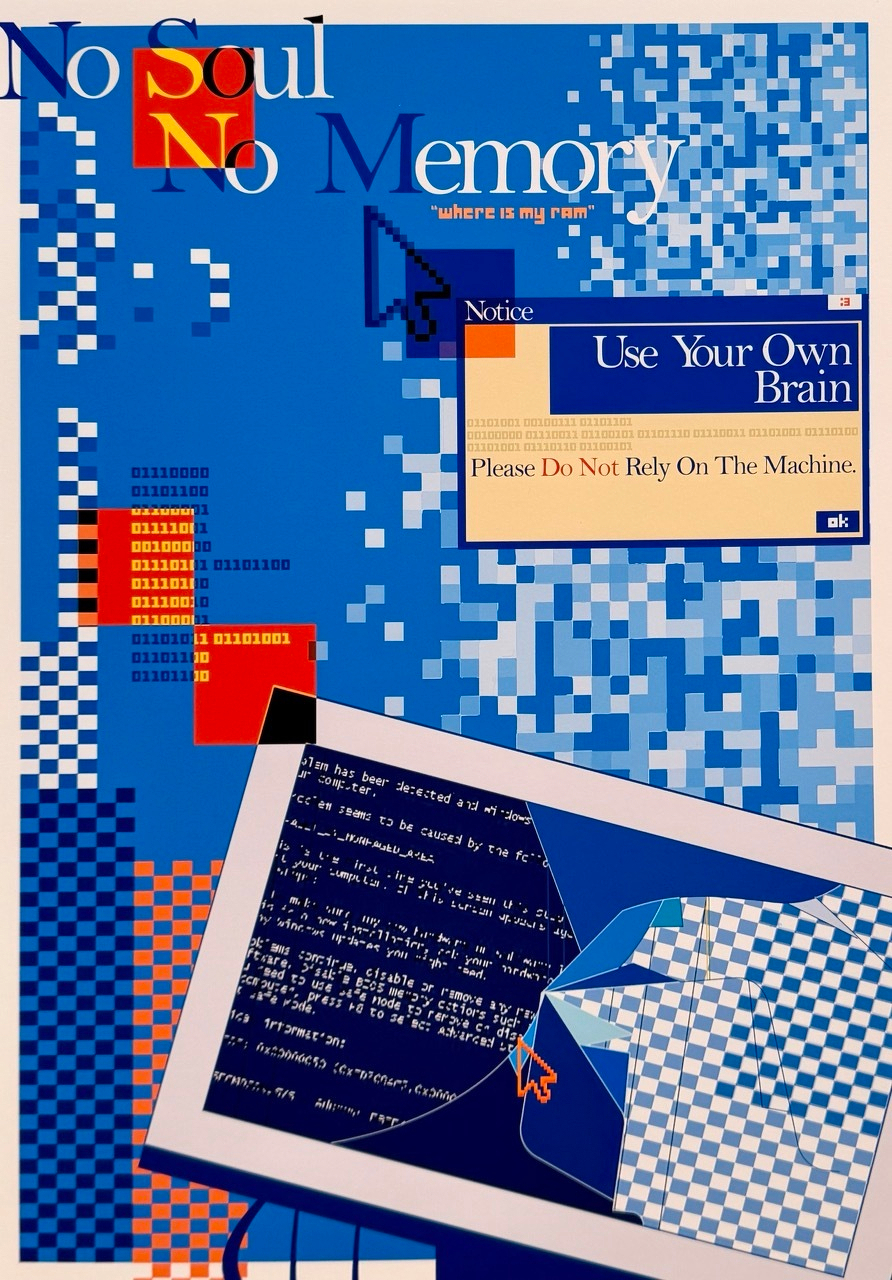
Image created by Abby Whymark - L3 Graphics and Photography Y2.
“I’ve created a design that primarily uses squares to emulate a pixelated effect. I wanted to achieve a distorted appearance, using blue as the dominant colour to reference a blue screen, with orange added as a bold contrasting colour. I enjoyed experimenting with shape, colour, and composition to create a visually striking outcome.”
The interesting question is not “can AI do this” it is “what if I used it for that”
A creative person doesn’t just ask AI to make something.
They push it.
They challenge it. They argue with it. They give it a strange constraint. They ask for something awkward. They drag it into a niche corner where the obvious examples start to run out.
That’s where AI becomes interesting.
Because when the tool can’t find the safe middle quite so easily, it has to start joining things together that don’t normally sit together. It has to reach across patterns. It has to make connections that are less obvious.
And that’s where a creative brain has an advantage.
The shortcut user asks, “Can you write this for me?”
The creative user asks, “What happens if we combine this old idea, that strange metaphor, this audience problem, this emotional tone, and this constraint that makes the whole thing awkward?”
Completely different result.
That’s why I think creatives can be better at AI than people who only see it as a shortcut. A shortcut gets you to the same place faster. Creativity asks whether the destination was any good in the first place.
Tools have always been misused by interesting people
Some of the best uses of technology come from people using tools in ways they were never designed for.
People make games in Microsoft Excel.
Excel was not created so someone could recreate a platform game inside a spreadsheet, but people do it because they look at cells, formulas and logic and see something beyond budgets and tables.
People use Word to store images.
Is that what Word is for? No. It’s a word processor. There are better tools for that job. But people use what they understand, stretch it into a different shape, and make it work for them.
Musicians have played saws as instruments.
A saw is designed to cut wood. Then someone looked at it, bent it, listened to the sound it made, and thought, “There’s music in that.”
That’s creativity.
It’s the ability to look at a tool and see more than its label.
And once one person does that, everyone else suddenly sees the possibility too. Someone makes a game in Excel and other people start wondering what else a spreadsheet can do. Someone plays a saw and suddenly an object from a workshop has a voice. Someone uses AI in a strange, thoughtful, deeply personal way, and other people realise the tool was bigger than the default box it arrived in.
The interesting people aren’t asking AI to do the thing, they’re picking it up, turning it sideways, and seeing what happens when they use it for something it wasn’t quite ready for.
That is how progress happens.
Someone looks at the ordinary thing and refuses to use it in the ordinary way.
AI can copy patterns, but you bring the taste
This is where I think creatives need to hold their nerve.
A handmade object still matters. A painting still matters. A performance still matters. A real voice, a real room, a real piece of craft, a real human choice still matters.
AI can simulate. It can imitate. It can produce digital versions of things that look convincing enough at a glance.
But the physical skill, the lived judgement, the years of taste, the frustration, the accidents, the little decisions that happen in the hand and the eye and the gut, that still belongs to the human.
And more than that, the creative mind is exactly the kind of mind that can use AI well.
Because you already do this.
You already question the first answer. You already push materials around. You already know when something feels flat. You already know when the thing on the page or the screen or the table hasn’t quite got there yet.
So apply that thinking to AI.
Don’t rest on the idea that your art form can’t be replaced and then refuse to look at the tools changing around it. Your craft might be safe, but your opportunities could grow massively if you bring your creative thinking to the technology rather than standing outside it shouting at it.
The exciting part is that you can make AI do things other people won’t think to ask for.
Because other people are asking it for shortcuts.
You can ask it for sparks.
The grey version is optional
AI defaults to grey.
That’s the bit people need to understand.
It defaults to safe, polite, agreeable, median output because that is what its prediction engine is built to do. It aims for the answer that feels most likely, most acceptable, most familiar.
So when people say, “AI content all sounds the same,” I mostly agree.
Bad AI use does sound the same.
But that’s not the tool’s final form. That’s the user accepting the first answer.
If you ask AI to write all your emails for you, in the same bland tone, with none of your thinking in it, people will feel that. Maybe they won’t know exactly why, but they’ll feel the absence of you.
If you ask AI to write every report from scratch with no point of view, no judgement and no context, then yes, you’ve made yourself easier to replace.
Because the machine is doing the thinking-shaped activity and you’re just approving the output.
That’s a dangerous place to be.
The better use is to put yourself into the machine.
Give it your rough thinking. Give it your opinion. Give it the story behind the story. Give it the constraint. Give it the thing you’re worried about. Give it the sentence you can’t quite land. Give it the metaphor that nearly works. Give it the half-formed idea you would normally leave in a notebook and forget.
Then use it to polish you.
Not replace you.
Polish you.
There’s a world of difference between asking AI to be creative on your behalf and using AI to help your creativity travel further, faster and in more directions than you could manage alone.
Bring the sparkly
I think this is the message creatives need to hear.
Your creative brain is not a weakness in the age of AI. It is the edge.
The world is about to be flooded with average. Average emails. Average images. Average posts. Average reports. Average ideas dressed up as finished work.
That means the human bits matter more.
Taste matters. Judgement matters. Opinion matters. Lived experience matters. The ability to say “that’s boring” matters. The ability to say “what if we try this?” matters even more.
Because nobody likes grey.
People remember sparkly.
So bring the sparkly.
Bring the odd connection. Bring the saw that somehow becomes an instrument. Bring the spreadsheet that becomes a game. Bring the idea that makes the AI stumble for a second because it can’t quite find the usual pattern.
That’s where the interesting work is.
The future of creativity with AI won’t belong to the people who ask for the fastest shortcut.
It will belong to the people who know how to make the tool sing.